
What VAR Really Is And Why It Attracts So Much Criticism
VAR, or Video Assistant Referee, was introduced to help on‑field officials correct major mistakes using replays, not to re‑referee every moment of a match. Yet for many viewers it has become a symbol of delay, confusion, and inconsistency, because the way decisions are checked and communicated often clashes with the emotional flow of watching live football, especially in high‑stakes moments that swing momentum. Understanding what VAR is allowed to do, and where it regularly struggles, helps you read those pauses and protests as part of the tactical story rather than background noise.
What Is VAR Actually Allowed To Check?
VAR is a team of officials watching the match on multiple screens who are permitted to intervene only in four categories: goals, penalty incidents, direct red cards, and cases of mistaken identity. The idea is to correct “clear and obvious errors” in decisions that can change a game, such as a foul missed before a goal or a red card that should not have been given. The final decision always remains with the referee on the pitch, who can accept the VAR’s advice or go to a pitch‑side monitor for their own review.
For viewers, that limited scope explains why some incidents draw checks while others are ignored, even if both look contentious in real time. A reckless foul in midfield that earns only a yellow might never be upgraded if it is judged below the threshold for a “clear and obvious” red, whereas a slight shirt pull in the box could trigger a lengthy penalty review because of its potential impact on the score. Once you internalise that hierarchy, the pattern of which stoppages lead to VAR involvement becomes more predictable when you watch live.
How The VAR Process Unfolds During Live Matches
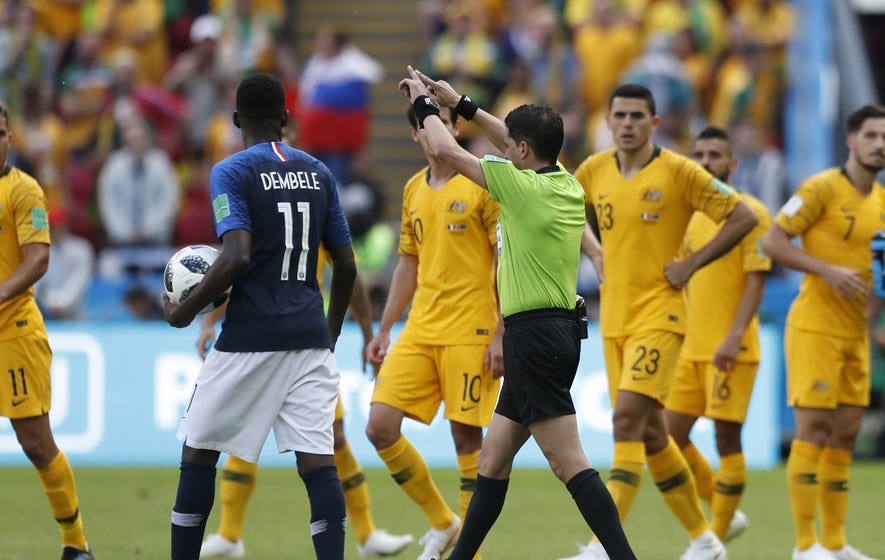
In practice, there are two basic pathways into a VAR review: either the on‑field referee requests help after sensing doubt, or the VAR team spots a potential clear error and alerts the referee via headset. They then check the incident using multiple camera angles, often with short delays and slow‑motion replays, before recommending either a “check complete” (keep the original decision) or an on‑field review. The referee signals a review by drawing a rectangle in the air, indicating the use of the pitch‑side monitor, and then confirms their final decision to the stadium and broadcast.
For viewers following every second, those checks can feel like long, empty pauses where nobody knows what is happening or why. The longer the delay, the more players surround the referee, the crowd whistles, and commentators speculate, which heightens frustration when the eventual outcome seems marginal or unchanged. Reading the referee’s body language—whether they run straight to the monitor or listen briefly and play on—helps you anticipate whether a major change, such as a goal being disallowed, is likely before the official signal arrives.
Why VAR Often Feels Like It Breaks The Rhythm Of A Game
เว็บดูบอล changy’s appeal lies partly in its continuous flow, where momentum builds through waves of attacks and quick transitions rather than constant resets. VAR checks interrupt that flow at precisely the moments of greatest emotional intensity—goals, penalty shouts, and potential red cards—forcing everyone to pause while a decision is dissected frame by frame. That delay can be especially jarring for teams that rely on fast restarts or emotional surges after scoring, because celebrations are cut short and the psychological advantage of a quick second goal can evaporate.
From a tactical viewing angle, the timing of a review can also change the feel of the next few minutes. A long check that ends with a goal being overturned can deflate the attacking team and lift the opponents, who suddenly feel “rescued” by technology rather than overrun. When you watch closely, you often see the team who benefits from a big VAR decision tighten up defensively and slow the tempo, while the aggrieved side presses harder and takes more risks, making that moment a pivot in both strategy and emotion.
How VAR Interacts With Offside And Goal Decisions
VAR’s role in offside calls is one of the biggest sources of debate, because it turns what used to be a quick flag into a precise, technical measurement using calibrated lines and freeze‑frames. Goals are routinely checked to see whether any attacking player was marginally ahead of the last defender at the moment of the pass, even if the assistant referee kept their flag down to let play continue. This has led to “armpit offsides” and other ultra‑tight decisions that feel correct under the letter of the law but unfair to many viewers who expect a common‑sense margin.
When watching live, you can tell a post‑goal offside check is underway if the referee holds off from signalling the restart and players remain in a half‑celebratory, half‑anxious state. If the delay stretches beyond a few seconds, it usually indicates that the angles are tight and lines are being drawn manually, which often ends in a very narrow call either way. Understanding that process allows you to interpret the length of the delay as a hint about how marginal the decision is, rather than seeing every review as equally clear‑cut.
Why Subjective Fouls And Penalties Drive The Strongest Reactions
Unlike offside, which is theoretically binary once the lines are set, penalty incidents and potential red cards still rely heavily on subjective judgment about contact, intensity, and intent. VAR replays slow these moments down, making every touch look heavier and every arm movement more deliberate, which can skew perceptions compared to real‑time speed. Different officials also have slightly different standards for what counts as “clear and obvious,” so similar fouls may be treated differently across matches and competitions.
This is the root of much of the anger you hear from commentators and supporters: they can accept that referees make mistakes, but they struggle when similar VAR situations produce different outcomes with no clear explanation. When you are watching a live match, you can start to spot which incidents are likely to inspire controversy by asking whether slow‑motion makes the challenge look dramatically worse or whether the contact remains marginal even after multiple views, which often foreshadows a divided reaction.
Why Fans And Pundits Keep Complaining About VAR
The consistent complaints around VAR cluster around three themes: delays, lack of transparency, and perceived inconsistency. Delays frustrate viewers because they drag out high‑tension moments and make it hard to celebrate spontaneously, especially when checks run well beyond a minute. Lack of transparency stems from minimal real‑time communication; in many leagues, neither stadium crowds nor TV audiences hear the full reasoning behind decisions, which leaves space for speculation and conspiracy theories.
Perceived inconsistency is perhaps the most damaging, because it erodes trust in the system’s promise to reduce “clear and obvious errors.” When almost identical handball or penalty incidents produce different outcomes, fans question whether technology has genuinely improved fairness or just added another layer of human judgment behind closed doors. Watching with that in mind, you can treat each contentious VAR moment as a test of how closely officials stick to their own standards within a single match, rather than expecting uniformity across all competitions and years.
How Watching Full Matches Live Shapes Your View Of VAR
Snippets on social media usually show only the most outrageous VAR mistakes, stripped of context, which can distort your sense of how often the system quietly corrects genuine errors. When you follow a full match from kick‑off, you see routine checks that confirm correct calls as well as rare interventions that prevent major injustices, such as missed red cards or off‑the‑ball fouls before goals. Over multiple games, this broader sample helps balance the headline controversies against the many uneventful reviews you barely notice in real time.
If you regularly ดูบอลสด instead of relying solely on highlights, you also see how teams adapt their behaviour to the presence of VAR. Defenders may be more cautious about grappling at corners, knowing that unseen tugs can now be punished on replay, while attackers might exaggerate contact less if they expect their falls to be re‑examined from several angles. Those subtle behavioural shifts show that VAR is not just about isolated decisions but about how players manage risk and pressure across the full ninety minutes, which only becomes visible when you stay with the game from start to finish.
Simple Checklist For Reading VAR Moments While You Watch
Because VAR incidents tend to cluster around the same types of situations, you can build a quick mental checklist that helps you interpret them more calmly while watching live. Instead of reacting only to the outcome, you can look at where on the pitch the incident occurred, how convinced the referee looked in real time, and whether the type of challenge fits into the limited VAR categories of goals, penalties, red cards, or mistaken identity. That framing turns each review into a mini‑analysis task rather than pure frustration.
A practical sequence might look like this:
- Identify which of the four VAR categories the incident likely falls under.
- Note the referee’s body language: confident whistle or visible doubt.
- Watch how quickly the check finishes: “check complete” or full monitor review.
- Compare the final call to similar incidents earlier in the same match.
- Observe how both teams adjust their aggression and tempo afterward.
Following a routine like this changes how you experience VAR from a passive wait into an active reading of match dynamics. You start to link long delays to especially complex or marginal calls, recognise when a referee is trying to keep a consistent line across ninety minutes, and see how players shift their tackling, pressing, and penalty‑area behaviour once a controversial decision has gone against them. That perspective makes VAR moments part of the tactical narrative rather than interruptions that sit outside the match.
Summary
VAR was introduced to correct clear, game‑changing mistakes in four specific areas, but its implementation has reshaped how viewers experience goals, penalties, and red cards in real time. Delays, opaque communication, and subjective interpretations—especially around penalties and tight offsides—fuel ongoing criticism, even as the system quietly fixes many errors that would previously have stood. When you watch full matches with an eye on how VAR checks affect momentum, player behaviour, and tactical risk‑taking, those controversial reviews become easier to interpret as turning points within the match rather than random disruptions.