
Truco Argentino: las reglas contadas como si fuera la primera vez
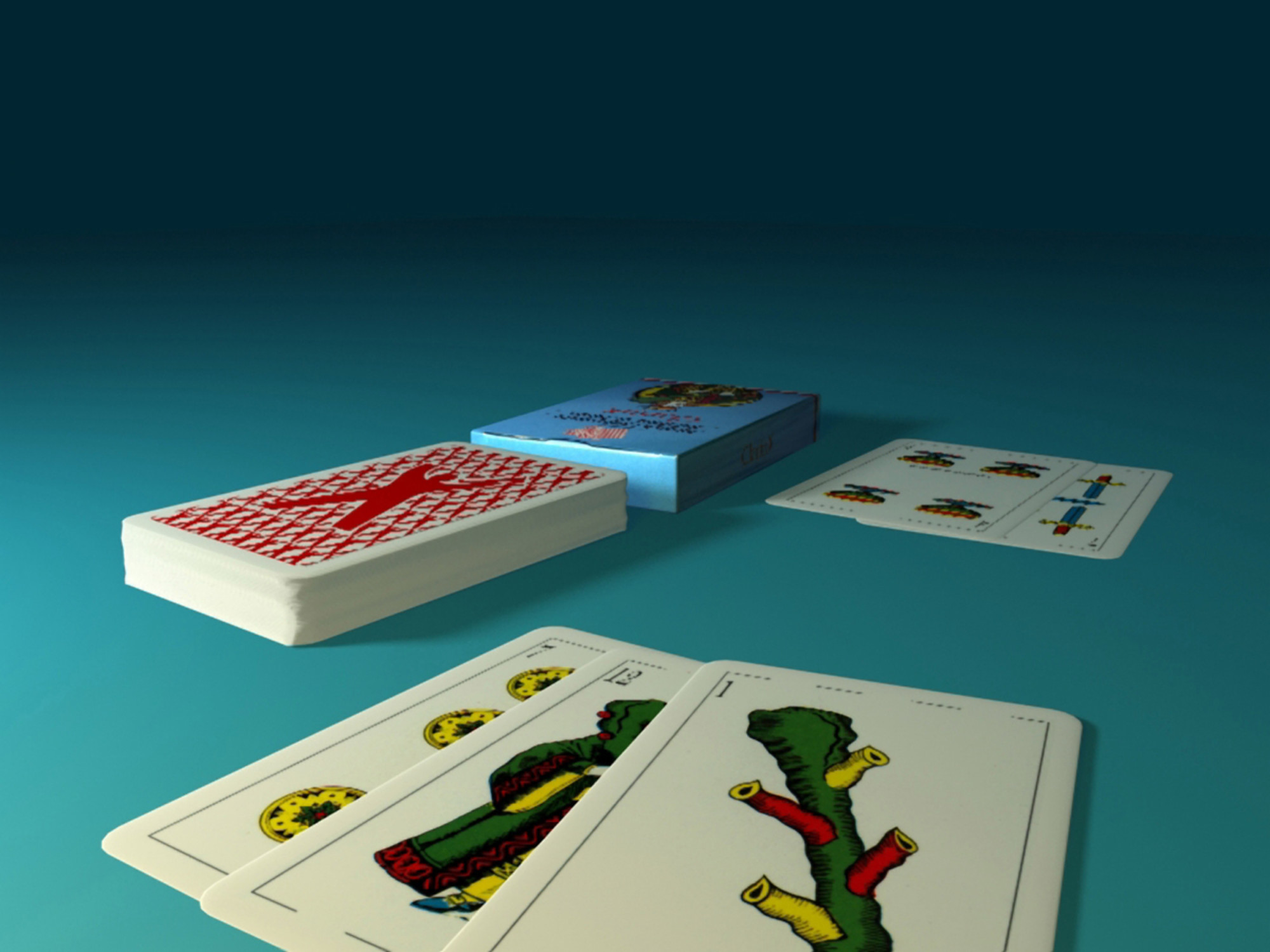
Imagine you’ve never heard of Truco. You arrive at a table, are dealt three cards, and someone says, “Okay, let’s play.” What follows is total confusion: shouts you don’t understand, gestures you can’t read, points that appear without any clear indication of where they came from.
TrucoReal exists, among other things, to prevent that from happening. So that before you sit down at a real or digital table, you’re clear on what’s going on and why. These are the rules of Truco explained from scratch, without assuming you already know anything.
The scenario: who plays and with what
Truco is played with a 40-card Spanish deck, without eights or nines. It can be played by two, four, or six people. In the four- or six-player format, teams of two or three players sit alternately around the table, one player from each team.
The goal is to reach 30 points before the opposing team. Points are earned one-on-one, and each hand can contribute points from two different sources: Envido and Truco.
The hierarchy of the cards: the first obstacle
Before playing a single card, you need to know the value of each one. And here’s the first surprise: the order doesn’t follow the numbering.
From highest to lowest: 1 of swords, 1 of clubs, 7 of swords, 7 of coins, 3, 2, 1 of coins, 1 of cups, 12, 11, 10, 7 of cups, 7 of clubs, 6, 5, 4.
Three key facts to memorize quickly: the Ace of Spades beats everything without exception, a 3 beats any face card, and the 4 is the weakest card in the deck. The rest you learn with practice.
The Envido: the first bet
At the start of each hand, before any cards are played, there is the option to place an Envido bet. This is a separate bet from the main card game, settled by comparing the points of the initial hand.
The Envido points are calculated as follows: the two highest-ranking cards of the same suit are taken. If there are two or more cards of the same suit, their values are added together plus 20 fixed points. If all the cards are of different suits, the Envido is the value of the highest card without the 20 extra points. Face cards are always worth zero.
The escalation: Envido is worth 2 points if accepted, Envido-Envido is worth 4, Real Envido is worth 3, Falta Envido awards exactly the points the opponent needs to win. Rejecting any bid gives one point less to the bidder.
Fundamental rule: if no one called Envido before the first card of the first trick falls, the opportunity is lost for that hand.
The Trick: the bet that comes next
Once the Envido bet is settled, the trick-taking begins. Each trick is a round where all players play a card, and the player with the highest card according to the hierarchy wins. The player who wins two out of three tricks wins the Truco.
The escalation: A “Truco” is worth 2 points if accepted, a “Retruco” is worth 3, and a “Vale Cuatro” is worth 4. Rejecting always results in one point less than the called level. Any player can respond to a call by moving up to the next level instead of accepting or rejecting.
In the event of a tie in a trick, the player who led always wins. If each team wins one trick and the third is tied, the team that won the first trick wins.
Going to the deck: the elegant exit
At any time, a player can say “I’m going to the deck” and fold. They forfeit the points in the game but avoid further losses. It’s not surrendering; it’s managing the damage. Players who never fold out of pride usually end the game with fewer points than those who know when to fold.