
From Emoji Mashups to Spinning Wheels: Why Simple Interactive Ideas Go Viral
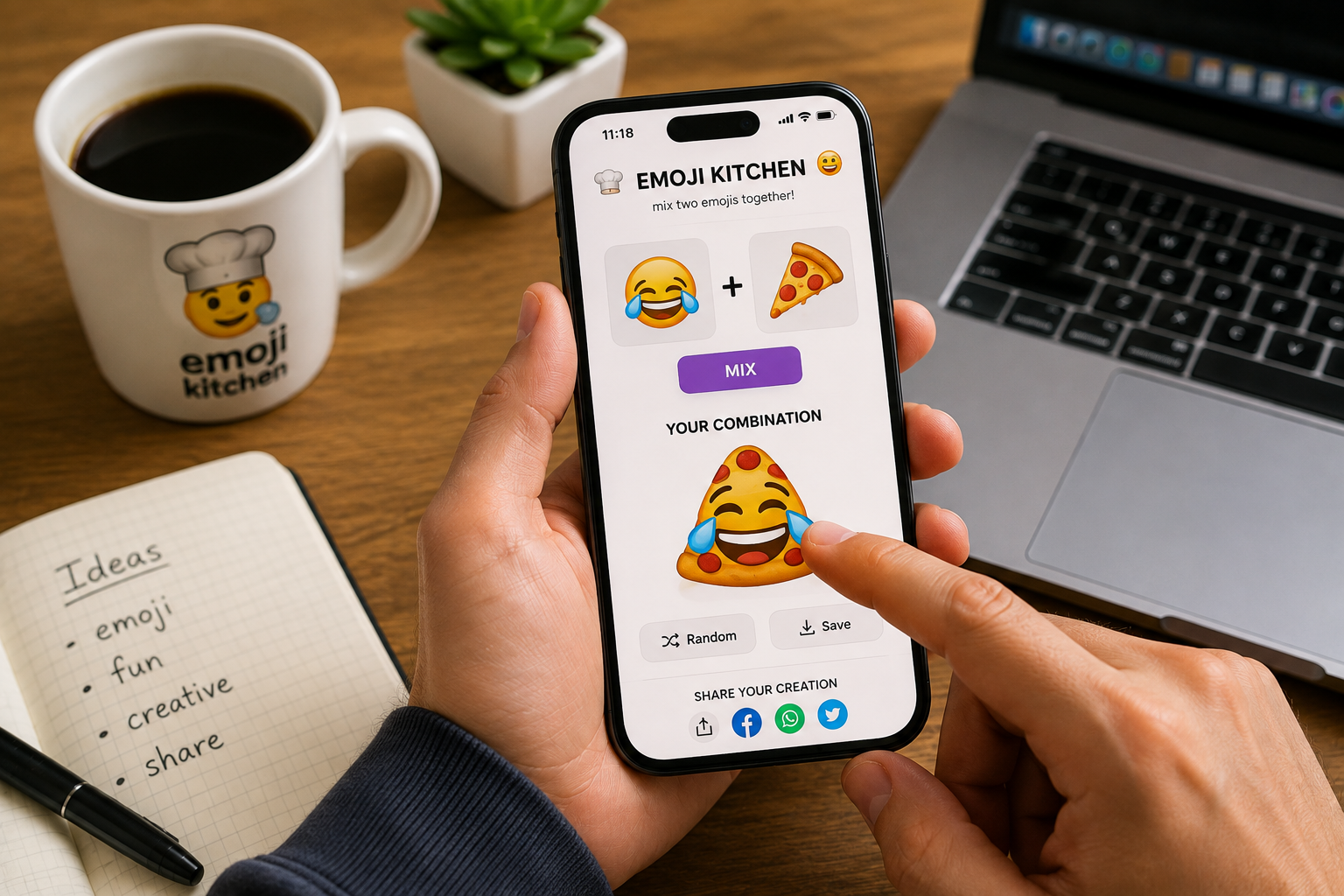
The modern internet has an unusual talent for turning very simple ideas into surprisingly engaging experiences. Emoji combinations are a perfect example. A user takes two familiar symbols, mixes their meanings and suddenly creates something funny, expressive or completely unexpected. Tools inspired by concepts such as Emoji Kitchen work because almost no explanation is necessary: choose something familiar, combine it with another element and see what happens.
The same principle appears elsewhere in digital entertainment, including casual games built around immediate visual outcomes. Indian users exploring lightweight online experiences may encounter platforms such as https://wheelout.com.in/, where wheel-based casino entertainment applies a similarly straightforward interaction model: an action is performed, anticipation builds and a visible result follows. Emoji mashups and chance-based gaming are obviously very different activities, particularly when money is involved, but both demonstrate how strongly modern interfaces benefit from simplicity, visual feedback and curiosity.
Why Emoji Mashups Became an Internet Language
Emoji were originally created to make digital communication more expressive. A smiling face could soften a sentence, while a heart could communicate emotion without requiring additional words. Over time, however, users wanted greater flexibility.
Standard emoji have fixed meanings and appearances. Combining them creates room for humor and personal interpretation.
A laughing face combined with fire might communicate enthusiasm. A cat mixed with a surprised expression can become a reaction image. A heart paired with an unexpected object may create something deliberately absurd.
The appeal comes from experimentation rather than utility.
Users are effectively asking one small question every time they create a combination: what will happen if I put these two together?
That curiosity is one of the strongest engagement mechanisms on the internet.
The Power of Immediate Results
Many successful online tools share a remarkably simple structure:
- The user makes a choice.
- The platform responds immediately.
- A new visual result appears.
- The user decides whether to try again.
There are very few barriers between intention and outcome.
Emoji combination tools are especially effective because the result can usually be understood instantly. There is no tutorial to complete and no complicated interface to learn.
This pattern has become increasingly common across modern digital products.
Photo filters provide immediate transformations. Random generators produce instant suggestions. Personality quizzes return quick classifications. Casual games respond directly to taps or swipes.
The less time users spend understanding an interface, the more time they can spend actually interacting with it.
Why Wheels Are Such Powerful Visual Interfaces
A wheel communicates its function almost immediately.
Even before interacting with it, most users understand that it is designed to rotate and eventually stop somewhere. This makes it an unusually intuitive interface.
| Interactive format | Main attraction | Typical result |
| Emoji mixer | Creative combination | New visual expression |
| Random generator | Curiosity | Unexpected suggestion |
| Digital wheel | Anticipation | Randomized outcome |
| Quiz | Self-discovery | Score or category |
| Puzzle | Problem solving | Completed challenge |
Despite their differences, these formats minimize the distance between user action and feedback.
That is particularly valuable on mobile devices, where complicated controls can quickly become frustrating.
India’s Mobile-First Digital Audience
India provides an especially interesting environment for lightweight interactive platforms. Smartphones have become a primary gateway to the internet for a vast number of users, influencing how websites and entertainment products are designed.
Mobile audiences tend to value several characteristics:
- fast loading;
- clear navigation;
- large interactive elements;
- minimal text before the main experience;
- immediate feedback.
These preferences have encouraged developers to build interfaces around taps, gestures and visual responses rather than complex desktop-style menus.
A tool involving emoji is naturally compatible with this environment because emoji already belong to everyday mobile communication.
Wheel interfaces have similar advantages. They can occupy most of a small screen while requiring only a simple interaction.
Visual Feedback Matters More Than Ever
Users increasingly expect interfaces to acknowledge their actions instantly.
When a button is pressed, something should happen. When an emoji is selected, the interface should visibly react. When a wheel is activated, movement should begin without unnecessary delay.
Even tiny animations can make a platform feel more responsive.
Developers often use:
- button transitions;
- loading indicators;
- movement animations;
- changing expressions;
- progress feedback;
- subtle sound effects.
These details do not fundamentally change what a tool does, but they influence how satisfying it feels.
A technically functional platform can still feel outdated if its interface appears unresponsive.
Simplicity Is Harder to Design Than It Looks
Minimal interfaces sometimes appear easy to build because relatively little is visible on the screen. In reality, removing unnecessary complexity requires careful design decisions.
Developers must determine:
- Which action should receive the most attention?
- Which information can be hidden until needed?
- How many choices should appear simultaneously?
- What happens after each interaction?
- How does the experience work on a small phone?
Emoji combination tools succeed when users can understand the central interaction without instructions.
The same design philosophy can be applied to many other products, from entertainment platforms to calculators and educational tools.
Good simplicity is deliberate rather than empty.
Why Users Return to Simple Experiences
Complex games often rely on progression systems, long narratives or competitive rankings to encourage repeat participation.
Simple interactive tools use a different mechanism: variation.
The core action remains almost identical, but the result changes.
With emoji combinations, the user chooses different symbols. With random generators, a new answer appears. With wheels, the stopping position changes.
This produces repeatability without requiring complicated mechanics.
The experience effectively asks: what happens next time?
That small question can be enough to sustain curiosity.
Conclusion
The success of emoji mashups demonstrates that online entertainment does not need complicated mechanics to become engaging. A familiar symbol, an unexpected combination and immediate visual feedback can be enough to create an experience people want to repeat and share.
The same broader design principles appear across casual games, random generators and wheel-based platforms: reduce friction, make the main interaction obvious and provide an immediate response.
Yet context remains important. Mixing two emoji is harmless experimentation, while casino-style entertainment can involve financial consequences and therefore requires clear limits and responsible participation.
As the internet becomes increasingly mobile and visual, simple interactive ideas will continue to thrive. Whether users are combining expressions, generating strange digital creations or watching an animated wheel turn, the strongest experiences often begin with the same basic ingredient: curiosity about what will appear on the screen next.