
From Emoji Combinations To Live Feeds: How Interactive Systems Build Continuous Engagement
Why Interaction Beats Content In Holding Attention
Digital platforms often focus on content quality as the primary driver of engagement, yet observation of user behavior shows a different pattern. Users rarely stay because of a single piece of content; they stay because the system continuously responds to their actions. This distinction explains why even simple tools—such as emoji combiners—can retain attention longer than complex but static content pages.
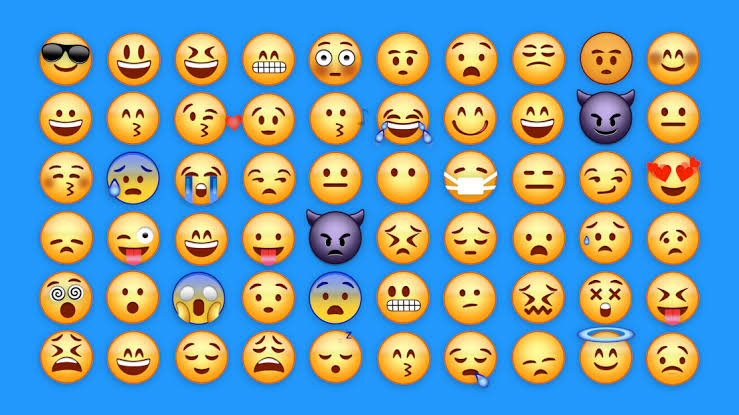
Emoji-based interaction systems demonstrate a subtle but powerful principle. When a user combines two emojis and instantly receives a new visual result, the experience creates a feedback loop. The user is not simply consuming content but actively shaping it. This shift from passive consumption to active participation transforms short interactions into extended sessions.
The same principle applies to real-time environments such as tamasha india live cricket, where users remain engaged not because of a single update, but because the system continuously evolves. Each moment introduces new information, reinforcing the expectation that the next interaction will produce a different outcome. This expectation, rather than the content itself, sustains attention over time.
What emerges is a shared structure between seemingly unrelated platforms. Whether combining emojis or following live data, users are drawn into systems that reward interaction with immediate, visible change.
The Core Mechanics Behind Continuous Engagement
To understand why these systems are effective, it is useful to break down the mechanics that drive them. These are not abstract ideas but observable patterns present in high-retention platforms across different categories.
- Instant feedback loops, where every user action produces a visible result without delay
- Low interaction cost, allowing users to experiment freely without cognitive or technical barriers
- Variable outcomes, ensuring that repeated actions do not produce identical results
- Progressive discovery, where each interaction reveals new possibilities rather than closing the experience
- State continuity, enabling users to build on previous interactions instead of starting from zero
These mechanics create a sense of flow. The user does not need to decide whether to continue; the system naturally leads them forward. This reduces friction and increases the likelihood of prolonged engagement.
Why Static Systems Fail To Retain Users
Platforms that rely on static content often assume that depth or quality alone will sustain attention. While these factors are important, they do not address the core issue: once content is consumed, there is no inherent reason to continue interacting.
For example, a well-written caption or a visually appealing post may attract initial engagement, but without a mechanism for continuation, the interaction ends quickly. The user either scrolls away or leaves the platform entirely.
Interactive systems solve this problem by embedding continuation into the experience itself. Instead of asking the user to decide what to do next, they present a clear and immediate next step. This can be as simple as suggesting another emoji combination or as complex as updating a live scoreboard.
The key insight is that retention is not a function of content alone. It is a function of how content is connected through interaction.
Translating Interaction Design Into Scalable Systems
Applying these principles requires more than adding interactive elements. It involves designing systems where interaction is central, not secondary. Platforms that succeed in this area treat every element as part of a larger engagement loop.
One effective approach is to structure content around exploration rather than consumption. Instead of presenting a fixed set of options, the system encourages users to discover new combinations, patterns, or states. This transforms the experience from linear to dynamic.
Another important factor is predictability combined with variation. Users should understand how the system works, but not be able to fully predict its outcomes. This balance maintains interest without causing frustration.
A Practical Framework For Building Engagement Systems
To implement these ideas in a structured way, platforms can follow a framework that aligns interaction design with user psychology.
- design interactions that produce immediate, visible results
- reduce barriers to entry so users can engage without preparation
- introduce variability to keep repeated actions interesting
- create pathways that connect individual interactions into a larger system
- maintain continuity so users feel their actions contribute to an ongoing experience
This framework shifts the focus from content production to system design. Instead of asking how to create better content, the question becomes how to create better interactions.
Non-Obvious Insights From High-Engagement Platforms
One overlooked aspect of interaction design is the role of micro-satisfaction. Small, immediate rewards—such as seeing a new emoji combination or a live update—accumulate over time, creating a strong incentive to continue.
Another insight is the importance of perceived control. Users are more likely to stay engaged when they feel that their actions influence the outcome, even if the system includes elements of randomness. This perception enhances involvement and reduces passive behavior.
Finally, timing plays a critical role. Systems that respond too slowly lose momentum, while those that respond instantly maintain it. The difference of even a fraction of a second can significantly impact engagement.
Why The Future Belongs To Interaction-Driven Platforms
As digital environments become more competitive, the ability to capture and retain attention will depend less on content volume and more on interaction quality. Platforms that understand this shift will prioritize systems that adapt to user behavior in real time.
Emoji-based tools and live data platforms illustrate this trend from different angles, yet they converge on the same principle: engagement is sustained through interaction, not consumption. By designing systems that continuously respond, evolve, and invite further input, platforms can create experiences that users are reluctant to leave.
The transition from static content to dynamic systems is not a trend but a structural change. Those who adopt it early will build platforms that feel alive, responsive, and ultimately more engaging than anything built on content alone.